Spinraza treatment found to restore vital amino acid in SMA type 1 children
In type 2 kids, taurine levels after therapy tied to better motor function
Written by |
- SMA type 1 children were found to have reduced taurine, an amino acid crucial for nerve cell communication.
- Spinraza treatment restored taurine levels in SMA type 1 and correlated with better motor function in SMA type 2.
- Further research is needed to investigate supplementing taurine as a potential therapy for SMA.
In children with spinal muscular atrophy (SMA) type 1, the most severe form of the genetic disease, treatment with Spinraza (nusinersen) restored levels of taurine — an amino acid that plays a role in the delivery of information between nerve cells — which were found to be low, according to a new study.
“Importantly, when these children were treated with the medicine … their taurine levels returned to normal,” the scientists wrote. “This suggests that taurine could be closely linked to how SMA develops and affects the brain.”
The research also revealed that, in children with SMA type 2, taurine levels were significantly associated with better motor function after Spinraza, even though youngsters with this disease type did not have reduced taurine levels before treatment.
“Together, these observations support a paradigm in which restoring SMN levels addresses the primary genetic cause of SMA, while parallel interventions aimed at correcting amino acid and metabolic imbalances could further enhance neuronal resilience and clinical outcomes,” the researchers wrote.
The study, “Nusinersen rescues taurine deficiency in patients with type 1 Spinal Muscular Atrophy,” was published in the journal Communications Medicine.

SMA is chiefly caused by mutations in the SMN1 gene that result in a deficiency of the SMN protein, which is essential for muscle function. The lack of this protein leads to the loss of specialized nerve cells called motor neurons in the brainstem and in the spinal cord. It also results in SMA symptoms such as muscle weakness and wasting.
Investigating the role of amino acid taurine in SMA
Amino acids are building blocks of proteins. Taurine regulates various cellular functions implicated in SMA. It is involved in cell-to-cell signaling in the central nervous system (CNS), which comprises the brain and spinal cord. It’s particularly important early in development as an inhibitory neurotransmitter, meaning it decreases the likelihood of electrical signal transmission along a nerve fiber.
However, according to the researchers, “the effect of SMN deficiency on central taurine homeostasis remains elusive.” Homeostasis is a self-regulating process that essentially acts like a bodily thermostat, keeping conditions within an optimal range.
Now, a team led by scientists in Italy analyzed taurine levels in a mouse model of SMA during early development, and in people with SMA, both before and after treatment with Spinraza — a widely approved disease-modifying therapy designed to increase SMN protein production from a backup gene called SMN2.
In mice, the results demonstrated that taurine levels decreased during CNS development, both in healthy and SMA mice. However, at late-stage SMA, taurine levels are significantly lower in SMA mice than in healthy animals, particularly in the brainstem.
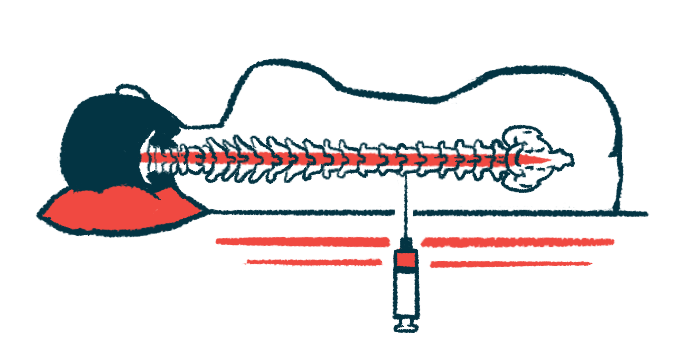
Taurine levels in cerebrospinal fluid, which surrounds the CNS, were also assessed in 37 children with SMA and seven age- and sex-matched children without the disease, who served as controls. Among the children with SMA, who were treated with Spinraza at two centers in Italy, 13 had type 1, 14 had type 2, and 10 had type 3.
Before treatment, taurine levels were 44% lower in children with SMA type 1 than in those without the disease. Taurine levels were also significantly lower in children carrying two SMN2 gene copies than in those with three gene copies. A higher number of SMN2 copies is usually associated with less severe disease. Here, the number of SMN2 gene copies was used as a proxy of the amount of working SMN protein.
“These findings demonstrate a reduction in the CSF levels of taurine levels that is specific for SMA patients affected by the most severe form of the disease,” the researchers wrote.
Taurine levels were not associated with clinical procedures such as noninvasive ventilation, the insertion of a feeding tube, tracheostomy — a surgical procedure that creates an opening in the windpipe to assist with breathing — and gastrostomy.

Spinraza treatment boosted taurine levels by 2 times in SMA type 1
Treatment with Spinraza for about 10 months increased taurine levels by twofold in children with SMA type 1, according to the researchers. No difference from the controls was seen after treatment.
According to the researchers, “these findings reveal that [Spinraza]-mediated upregulation of SMN impacts the taurine levels in SMA1 patients, restoring its deficiency associated with the severe form of the disease.” No such effect was seen in SMA types 2 or 3.
In children with SMA type 2, taurine levels were significantly associated with age and motor function, assessed by the Hammersmith Functional Motor Scale-Expanded (HFMSE). Particularly, taurine levels were higher in younger patients and in those with higher (better) HFMSE scores after treatment.
However, “since [Spinraza] does not alter taurine levels in treated SMA2 patients, it is difficult to explain a causal relationship between changes in taurine and motor functions,” the researchers wrote. The team noted that “future studies are needed to investigate the therapeutic potential of taurine supplementation in preclinical mouse models as well as in SMA patients.”
As study limitations, the team noted the relatively low number of participants and their broad age range.