
Why Universal Studios Singapore didn’t feel inclusive for me
My recent trip to the park highlighted a gap between accessibility and inclusivity
Written by |
The Lights, Camera, Action! attraction at Universal Studios Singapore was just as I remembered it. Without missed or delayed cues, fans blew harsh winds, sprinklers rained, sound effects thundered, lights flashed, and a ginormous boat barged in — all to simulate how a special effects team could recreate a Category 5 hurricane in New York City on a soundstage. I was 11 the first time I visited the attraction in 2010, when the theme park was brand new. Frankly, I would’ve been less surprised if there were changes or wonky elements by the time I turned 27.
There was one major difference in my experiences, though. When I was a child, the pram I used as my “wheelchair” was allowed on the main platform, which fell under a splash zone and would shake when the boat “hit” us. As an adult in a power wheelchair, I was herded to a small corner highlighted by yellow just off the platform, and I experienced none of the haptic stimuli.
We could easily reason that the architects of the park had liability in mind. Splash or shake the wrong wheelchair user, and their mobility aid could malfunction, or they could get an infection. But driving through Universal Studios Singapore as an adult with SMA, now trained in disability advocacy, my eyes were opened to the fact that just because something is designed to be accessible doesn’t mean it’s inclusive.
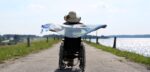
Lights, Camera, Action! wasn’t the sole attraction to offer me an incomplete experience. Two motion simulators — Shrek 4-D Adventure and Despicable Me Minion Mayhem — had me stationary on the ground, without water or wind effects, while people in rows behind and in front of me had them and rocked about in their seats.
Other rides? I couldn’t access those at all. The only attractions that offered me a full experience were the shows and meet-and-greets. Even then, I wondered why “Wicked’s” Elphaba and Glinda were posted to a ramp-less stage. They had to either kneel or step down to me for our photo opportunities. Sure, the extra mile the performers and their handlers went made me feel special, but I would’ve preferred not to have other visitors stare judgmentally as the fuss held up the line.
The magic of inclusion
In the grand scheme of things, inclusivity at a theme park is so trivial a matter that it’s a luxury. We have more important things to advocate for, like inclusive workplaces and financial access to healthcare. But when inclusive design already exists in theme parks globally, Universal Studios Singapore has no excuse.
Mystic Manor at Hong Kong Disneyland is my favorite ride of all time. It’s immersive, beautifully whimsical, and you can drive your wheelchair into a carriage built to give the full experience. Disabled passengers experience every twist and turn that nondisabled passengers do. I miss it dearly, more than any roller coaster I could ride before I had severe scoliosis. And it’s not the only accessible ride there, nor is Hong Kong Disneyland the only Disney park to offer the specialized carriage.
Disney doesn’t have a monopoly on disability inclusivity, either. Madagascar: A Crate Adventure, which was replaced by Despicable Me Minion Mayhem at Universal Studios Singapore, had a similar carriage before it was scrapped.
Guess the Wicked Witch of the East truly is dead …
It’s not enough to simply be accessible. If you’re segregating disabled visitors or leaving them out of an experience entirely, you aren’t welcoming them at all. Either design alternative methods to deliver all stimuli within an attraction or design attractions with disabled visitors in mind. Consult with them, do audience testing, and educate yourself on what’s possible. Better yet, hire a disabled designer!
I saw plenty of people using wheelchairs and mobility scooters at the park that day. And each of us paid over 80 SGD ($63) for a fun and memorable day with our friends and family.
I would’ve happily spent more money, too, if the park stocked dolls of “Wicked’s” Nessarose. I’d planned to buy at least two, one for myself and one for a friend’s nieces who get excited about wheelchairs and the people in them. Alas, the lack of her doll on the shelves became a microcosm of my experience at Universal Studios Singapore, and I ended up saving money.
Dorothy dolls were in stock, however, though we don’t even see her face in either “Wicked” film!
Inclusivity doesn’t just happen. It’s a choice you must make over and over again, at every stage of planning. It shouldn’t be only architectural, but also cultural and personal. Whether it’s a theme park attraction, a public event, or an important occasion in our lives, we ought to ask ourselves: “Who are we seeking to attract and welcome? What are we saying to them once they enter our doors?”
Note: SMA News Today is strictly a news and information website about the disease. It does not provide medical advice, diagnosis, or treatment. This content is not intended to be a substitute for professional medical advice, diagnosis, or treatment. Always seek the advice of your physician or other qualified health provider with any questions you may have regarding a medical condition. Never disregard professional medical advice or delay in seeking it because of something you have read on this website. The opinions expressed in this column are not those of SMA News Today or its parent company, Bionews, and are intended to spark discussion about issues pertaining to spinal muscular atrophy.


Leave a comment
Fill in the required fields to post. Your email address will not be published.