
Case of Newborn with Worst Type of Spinal Muscular Atrophy Underscores Gene’s Protective Role
Written by |
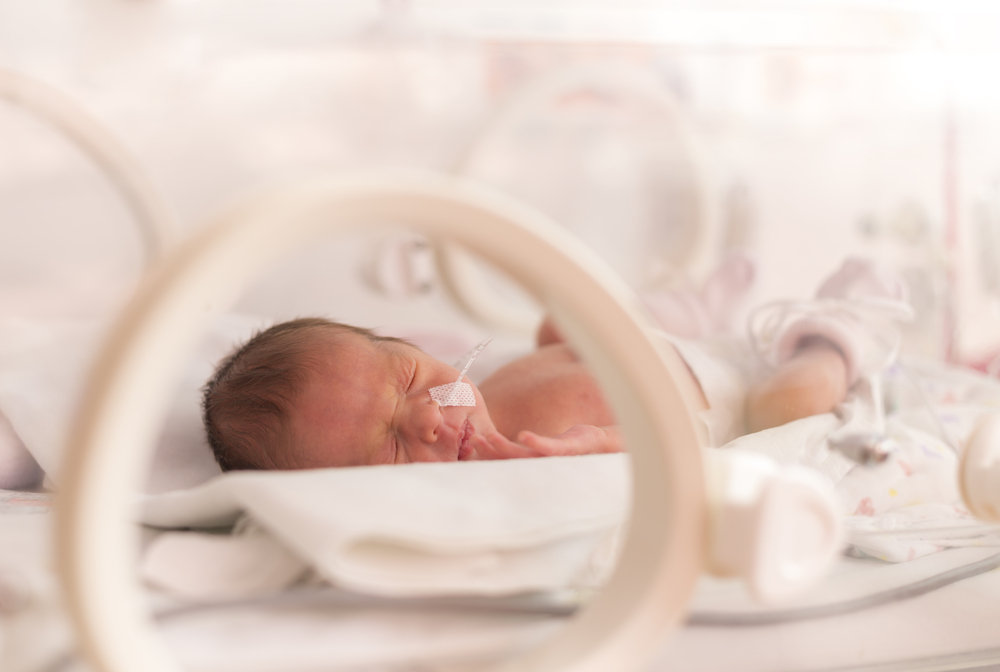
Fetuses with the most severe form of spinal muscular atrophy (SMA) usually die in the womb, but a newborn with the condition survived 12 days, according to a case study.
Infants born with SMA type 0 have mutations of the SMN gene. Since the newborn had fewer copies of the SMN2 gene that is seen in most children with type 1 SMA, the case confirms the protective role that SMN2 plays in the disease.
The report, “Very severe spinal muscular atrophy (Type 0)”, was published in the Avicenna Journal of Medicine.
The baby was in distress as soon as it was born. Researchers at Leeds Children’s Hospital – Leeds Teaching Hospitals NHS Trust said the woman noticed that her fetus did not move as much as most fetuses would during the two weeks before birth.
Scans showed there was excess fluid in her amniotic sac, the place inside the womb where an unborn baby develops.
The woman gave birth at 38 weeks to a child weighing 2.6 kg, or about 5 1/2 lbs. Physicians did not detect any chest movements that would indicate the baby was trying to breathe.
After two rounds of assisted breathing, the baby’s heart rate remained abnormally low, so physicians started chest compressions and intubated the infant. Intubated means inserting an endotracheal tube through the mouth to the airway, and connected the tube to a ventilator that helps the patient breath.
Intubation improved the baby’s heart rate and the amount of oxygen going into the blood.
A neurological exam at 9 days revealed that the baby lacked many of the normal reflexes newborns have. The child could neither gag nor suck, and had contractures — or permanent shortenings — of joints in the shoulders, elbows, hips, and knees.
Brain scans did not show abnormalities, and metabolic tests came back normal. But genetic tests revealed that the baby had mutations that had eliminated much of the material in the SMA gene.
The severity of SMA is mainly linked to levels of the SMN protein in the body. The protein can also be produced by a second gene — SMN2 or centromeric SMN. The duplicate gene produces little functional protein, however. Since the gene can exist in several copies, the more copies a patient has, the less severe the SMA.
Researchers said the infant had an intact SMN2 gene, but with fewer of the copies typically seen in children with type 1 SMA. Such observations had been made in earlier studies as well.
The child died when doctors removed the intubation.
“Patients with SMA and their families or carers should be routinely offered genetic counseling. Being an autosomal recessive disease indicates that there is a 25% chance to have an affected child if both parents were found to be carriers. In an American study, Caucasians have the highest carrier’s frequency and detection rate, whereas African-Americans had the lowest,” the authors concluded.




Delores
My granddaughter lived 2 months she had SMA 0 to 1she was a survivor that beat odds
kate
my great niece died of type 1 after 5 months- broke my heart
April
My daughter Mikayla lived 33 months with SMA Type 1 but it was a long hard journey for her we didn't even know she had SMA until she was19 months old said she had other things in with she did have a brain tumor but she passed in 2003 there seemed to be nothing then and harder to dx So happy for the families who now get treatment and a chance to fight this beast.
Jody
Our son lived 13 months with Type 1. Most difficult experience I've had in my life and that was in 1981.