Spinraza treatment improves motor function for adults with SMA: Study
Gains in knee bending, sitting stability lasted up to 3 years
Written by |

- Spinraza treatment significantly improves motor function in adults with SMA.
- These gains were sustained for up to three years in adult SMA patients.
- Spinraza has a manageable safety profile, making it a favorable treatment for adult SMA.
Treatment with Spinraza (nusinersen) led to sustained improvements in motor function in adults with spinal muscular atrophy (SMA), and showed a manageable safety profile, according to a nationwide study in South Korea.
Among 19 adults, researchers reported meaningful gains in motor function scores — particularly in knee bending and sitting stability — with benefits lasting up to three years.
According to researchers, this study shows that Spinraza “is therefore favorably recommended for adult SMA patients, with monitoring of both gross and fine motor functions.”
The study, “Clinical outcome and efficacy of nusinersen in Korean adult patients with 5q spinal muscular atrophy: Nationwide multicenter retrospective study,” was published in Acta Neurologica Belgica.
Long-term data on Sprinraza treatment in SMA are limited
SMA is chiefly caused by mutations in the SMN1 gene that result in a deficiency of the SMN protein, which is essential for muscle health. The loss of this protein triggers the dysfunction and death of motor neurons, the nerve cells that control movement, leading to SMA symptoms.
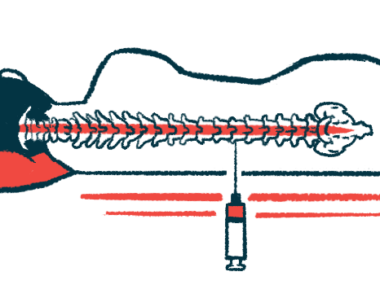
Spinraza is an injection therapy widely approved for treating adults and children with SMA. It works to increase functional SMN levels by allowing more protein to be produced from SMN2, a sort of backup gene that normally produces much less SMN than SMN1.
“However, data on its efficacy and safety in adult SMA patients on long-term period are limited regardless of SMA subtypes, despite several reviews of data in younger patients,” the researchers wrote.
To learn more, a team in South Korea analyzed the clinical outcomes and efficacy of Spinraza in adults with SMA who began the treatment at specialized hospitals between 2019 and 2024. Participants had a mean age of 29.9 years at the last follow-up and were mainly women (68%).

Motor function scores increased significantly in 15 patients
SMA type 2 was the most common disease type (63.2%), while the others had SMA type 3a. The mean age at symptom onset was 1.26 years. Almost all participants had three SMN2 gene copies (95%). Usually, a higher number of SMN2 copies is associated with less severe disease.
Spinraza was given according to the standard dosing schedule: three loading doses at two-week intervals, followed by a fourth dose five weeks after the third, then maintenance doses every four months. The mean treatment duration was 26 months (more than two years), and the longest was 52 months (more than four years).
Four patients discontinued treatment due to a lack of motor improvement and failure to meet national insurance reimbursement criteria. Among the remaining 15 patients, the Hammersmith Functional Motor Scale-Expanded (HFMSE) score, used to assess motor function, increased significantly by 2.28 points after nearly one year.
Clinically meaningful improvements (HFMSE increases of 3 or more points) were noted in six patients (40%) at one year, nine (82%) at about two years, and six (86%) at three years. Participants experienced a mean increase of 4.55 points after two years and 6.57 points after three years of treatment. The benefit was greater in SMN type 2 patients, although the mean HFMSE scores remained higher in those with SMA type 3a.
Despite the late initiation of treatment, motor function improved … and the beneficial effects of [Spinraza] persisted for up to three years, providing strong evidence for its effectiveness in adult SMA patients.
All patients showed meaningful improvement after about four years (9.25 points), although it was not statistically significant.
Among HFMSE parameters, the most significant improvements were observed in leg flexion (knee bending) and stability during sitting. Earlier initiation of treatment was associated with significantly better outcomes.
All adverse events reported were associated with the administration procedure into the spinal canal (intrathecal injection), including five events of headache and two of pain at the injection site.
Three patients who had already shown clinically meaningful improvements switched to Evrysdi (risdiplam) due to difficulties with intrathecal administration, not due to a lack of therapeutic efficacy, the team noted.
“Despite the late initiation of treatment, motor function improved … and the beneficial effects of [Spinraza] persisted for up to three years, providing strong evidence for its effectiveness in adult SMA patients,” the researchers wrote.