Itvisma (onasemnogene abeparvovec-brve) for SMA
 Fact-checked by
 What is Itvisma for SMA?
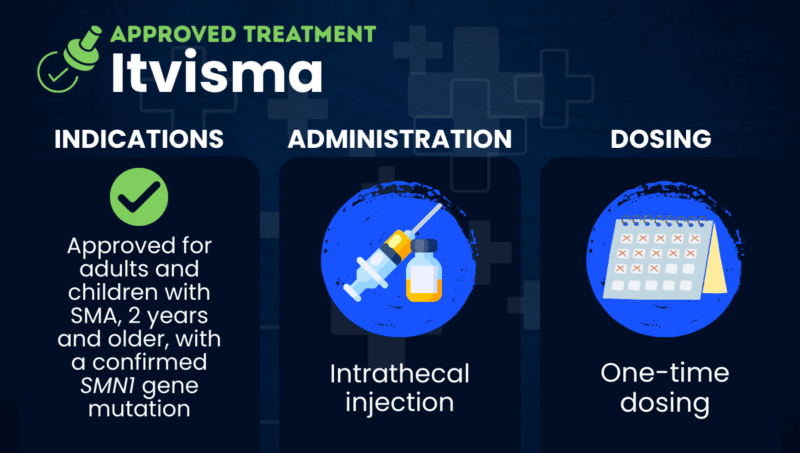
Itvisma (onasemnogene abeparvovec-brve) is a one-time gene therapy that’s approved for adults and children, 2 years and older, with spinal muscular atrophy (SMA).
The most common types of SMA are caused by SMN1 gene mutations that result in a lack of the SMN protein which is important for the health of the nerve cells involved in muscle control. Those cells progressively die off, leading to disease symptoms.
Itvisma is designed to deliver to the body a healthy version of SMN1, giving cells the tools to produce their own SMN protein in the long term. The gene-therapy construct is packaged into a viral carrier called adeno-associated virus 9 (AAV9) to help it be taken up by human cells, and is given via a one-time injection into the spinal canal, called an intrathecal injection.
It is marketed by Novartis, which also markets Zolgensma (onasemnogene abeparvovec-xioi), a similar gene therapy that is infused into the bloodstream and approved in the U.S. for newborns and toddlers up to 2 years old.
Therapy snapshot
| Brand name | Itvisma |
| Chemical name | Onasemnogene abeparvovec-brve |
| Usage | Used to treat adults and children with SMA |
| Administration | Intrathecal injection |
Who can take Itvisma?
Itvisma is approved for adults and children with SMA, 2 years and older, with a confirmed mutation in the SMN1 gene.
No specific contraindications are listed for its use, but Itvisma does come with a boxed warning that it could cause serious liver injury, so its use in individuals with preexisting liver impairment should be carefully considered.
The medication is also not recommended for people previously treated with Zolgensma.
How is Itvisma administered?
Itvisma is administered by a healthcare provider as a single intrathecal injection lasting one to two minutes. The recommended dose is 120 trillion vector genomes.
Before the injection, healthcare providers must ensure that the patient does not have any active infections and is up-to-date on vaccinations. They’ll also run blood tests to evaluate liver and kidney function and blood cell counts, and look for antibodies against AAV9.
A day before the injection, the patient will start a course of corticosteroids, a class of anti-inflammatory medications, to help prevent an immune response against the gene therapy. Corticosteroid treatment should continue for 30 days, or longer if liver function tests are not yet normal, before being gradually tapered off.
Itvisma in clinical trials
Itvisma’s approval was based mainly on data from a Phase 3 trial called STEER (NCT05089656), which enrolled children and teens with SMA, ages 2 to 17, who were able to sit but not walk independently and had never received any disease-modifying therapy.
Participants received Itvisma or a sham procedure that mimicked the administration but didn’t give any active treatment. The results showed Itvisma led to significant improvements in motor function after a year compared with the sham group.
In another Phase 3b study called STRENGTH (NCT05386680), Itvisma stabilized motor function in children with SMA, ages 2 to 17, who had discontinued the approved therapies Spinraza (nusinersen) or Evrysdi (risdiplam).
Itvisma side effects
The most common side effects of Itvisma include:
- upper respiratory tract infection
- upper gastrointestinal symptoms
- fever
- headache.
According to the boxed warning, acute serious liver injury and elevated liver enzymes could occur with Itvisma, especially in people with preexisting liver impairments or liver infections. Liver function should be assessed before treatment, for at least three months afterward, and at any other time it is clinically indicated. Corticosteroids should also be given before and after the injection.
Other potentially serious side effects of Itvisma could include:
- temporary decrease in the level of platelets, which are involved in blood clotting
- nerve damage, with symptoms of numbness, tingling, or pain in the arms, legs, hands, or feet
- thrombotic microangiopathy, where blood clots form in small blood vessels
- elevated blood levels of cardiac troponin I, a biomarker of heart damage.
Patients will be carefully monitored for these adverse events and treated as appropriate, including referrals to specialists, should they arise.
There is a theoretical risk that the AAV carrier could integrate its DNA into a person’s own DNA, potentially activating genes that cause tumor formation; however, the clinical relevance of this is not known.
Females of reproductive potential should use effective contraception and refrain from egg donation for six months after receiving Itvisma. Men capable of fathering a child should use a barrier method of contraception (e.g., condoms) and refrain from sperm donation for three months after receiving Itvisma.
SMA News Today is strictly a news and information website about the disease. It does not provide medical advice, diagnosis, or treatment. This content is not intended to be a substitute for professional medical advice, diagnosis, or treatment. Always seek the advice of your physician or other qualified health provider with any questions you may have regarding a medical condition. Never disregard professional medical advice or delay in seeking it because of something you have read on this website.