
MDA Engage: National ambassador brings message of belonging, resilience
Keynote will explore struggle, community, and the value of genuine connection
Written by |

Lily Sander will never forget what it was like to meet other people with neuromuscular diseases the first time she attended Muscular Dystrophy Association (MDA) Summer Camp.
Living with Charcot-Marie-Tooth disease, Sander had met only one or two other people with neuromuscular diseases in her city. She was used to explaining why she used a wheelchair and answering questions about her condition.
Going to camp with other young people who had neuromuscular diseases was “life changing,” she said. It wasn’t just that she was surrounded by others living with similar conditions. They were also girls her age and a few years older whom she could look up to and learn from — role models who faced some of the same challenges she did.
That sense of belonging and community is what Sander is looking forward to at MDA Engage: Dallas, set for Oct. 23-24 at the Renaissance Dallas Hotel. Sander, now in her second year as MDA National Ambassador, will deliver the keynote address. The two-day event is free for community attendees and brings together people living with neuromuscular diseases, including spinal muscular atrophy, muscular dystrophy, amyotrophic lateral sclerosis, and myasthenia gravis, along with people who support them. Attendees can learn about the latest developments in neuromuscular care, share resources, and connect with others in the community.

Two days of ‘magic’
Sander spoke about the value of learning from and connecting with other people who have neuromuscular diseases in an interview with Bionews, the parent company of this site, ahead of the MDA Engage symposium.
“People who are attending a patient-centered event for the first time are in for … magic,” she said. When she is using her wheelchair or another assistive device, “no one’s looking at me like I’m an anomaly” or like “an animal to be viewed in a zoo, which is so dehumanizing,” she said. “Everyone here has a neuromuscular disease or something related, so we all understand each other on that fundamental level, and that gets rid of some of those barriers.”
That sense of mutual acceptance is at the heart of Sander’s keynote, “Beyond the Diagnosis: Belonging, Struggle, and Hope.” Her keynote will focus on “the comfort of community, the reality of struggle, and the beauty of resilience,” Sander said. “It’s meant to ground this symposium in genuine connection, creating space for us to learn from one another as well as from experts in the neuromuscular disease field.”

Lily Sander is a National Ambassador for the Muscular Dystrophy Association. (Courtesy of MDA)
Sander said it’s great to hear about research advances, but they can sometimes seem nebulous in everyday life. She is especially interested in concrete advice and life hacks from patients and experts such as occupational, physical, and speech therapists.
“That’s where my heart is, with my people,” Sander said. “I’m excited to listen in on those daily living conversations because … research and … advancements are … important. But while we are waiting for them, and while science catches up, we need to be able to live our lives well and independently.”
MDA’s sessions will cover topics including research, policy, and gene therapy, but Sander is most enthusiastic about practical tips for daily life.
“I am especially excited to attend the Daily Living Sessions because of the life-changing advice and perspective shared — insights that can be implemented immediately to improve day-to-day living with neuromuscular disease,” Sander said. “I’ve always believed in prioritizing quality of life today while research and science race toward the treatments of tomorrow.”
Education and connection
MDA Engage combines updates on treatment advances with practical guidance for living with a neuromuscular disease, explained Marissa Lozano, MDA’s director of community education, in a written interview with Bionews.
“Advances in treatment will undoubtedly be a major draw, especially as the pace of progress in neuromuscular disease continues to accelerate,” Lozano said. “People want to understand not only what’s available today, but what’s on the horizon and how those advances may affect their lives.”
Attendees also can learn about standards of care relevant across many neuromuscular diseases, including cardiac and pulmonary health, exercise, and nutrition. These topics can help people and families take a more proactive approach to managing their health. Equally important, Lozano said, are opportunities for connection and conversation.
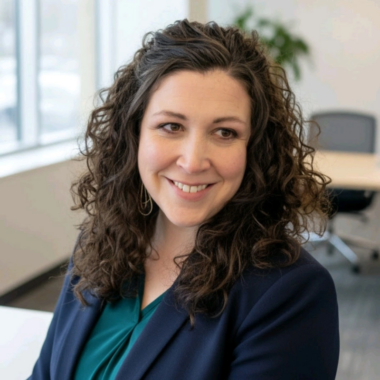
Marissa Lozano is director of community education at the Muscular Dystrophy Association. (Courtesy of MDA)
“Some of the most meaningful discussions happen in our diagnosis-specific breakout groups, where attendees can engage directly with expert clinicians and peers in a more personal setting,” she said. “Because these conversations are driven by the questions and concerns people bring into the room, they are highly relevant and often deeply impactful.”
During the Ask the Experts Q&A session, attendees frequently ask about treatment options and access to clinical trials, particularly people who may not meet strict eligibility criteria, Lozano said.
“We also hear a lot about finding healthcare providers outside of the neuromuscular specialty team who understand these conditions, such as physical therapists, primary care providers, and other specialists,” she said.
Insurance challenges also come up often, particularly those involving treatment approvals and durable medical equipment.
At the same time, MDA Engage focuses strongly on practical guidance that can help attendees navigate everyday life.
“Questions like, ‘How do I maintain my independence?’, ‘How do I get the equipment I need?’, ‘What should I be eating?’, and ‘How do I manage stress and anxiety?’ come up often,” Lozano said.
The Daily Living sessions are designed to provide practical information attendees can use right away.
“Sessions on exercise and mobility equipment are consistently popular because they offer practical strategies for staying active, increasing independence, and improving quality of life,” Lozano said.
Finding and using your voice
The meeting also includes a session on the transition to adulthood, focusing on the emotional and practical challenges that come with this stage of life, “both for young adults learning to advocate for themselves and for parents adjusting to a changing role,” Lozano said.
Participants can also attend a public policy session designed to help them better understand issues affecting the neuromuscular disease community and identify meaningful ways to stay informed and take action.
“The momentum in the neuromuscular disease space is real,” Sander said. “Treatments are being developed, tested, and refined. New technologies are opening doors that did not exist even a decade ago. Collaborations are growing across institutions and disciplines. At the same time, public policy is opening doors and changing lives.”
She also said people living with neuromuscular diseases are finding community and their voices.
“Children with neuromuscular disease are inheriting a more accepting world than those before them did,” she said. “We are living in the midst of unprecedented progress that is deeply hopeful.”
Sander is looking forward to reconnecting with the community.
“I like to say that my disability joy needs to be boosted,” Sander said. She’s counting down the days until “my joy supply can be replenished by the atmosphere and the conversations happening, and especially seeing people younger than me that are coming into this next generation of advocates,” she said. “You don’t know what this kind of connection can do for your soul and for your spirit.”
Note: The SMA News Today team is providing coverage of the MDA Engage Symposium. Go here to see the latest stories from the conference.




Leave a comment
Fill in the required fields to post. Your email address will not be published.