
Approved SMA meds found to ease kids’ breathing problems during sleep
Treated type 2, 3 children saw benefits spanning over 3 years
Written by |
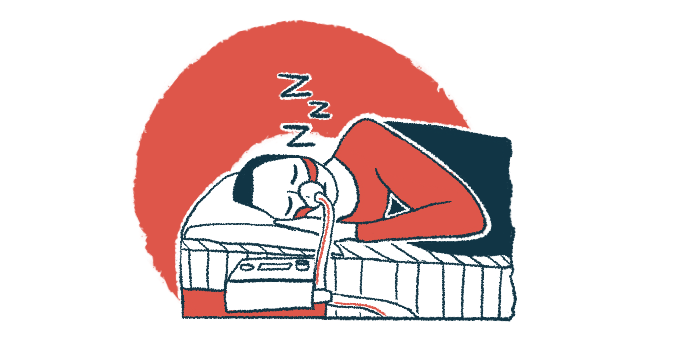
- Children with SMA types 2 and 3 on Evrysdi and Spinraza show stabilization or easing of sleep-related breathing problems over time, a study found.
- The benefits seen with either of the two disease-modifying therapies lasted for more than three years.
- In children with SMA type 3, fewer mismatched movements between the chest and abdomen during sleep were observed.
Sleep-related breathing problems were found to ease over time in children with spinal muscular atrophy (SMA) types 2 and 3 receiving the widely approved therapies Evrysdi (risdiplam) or Spinraza (nusinersen).
That’s according to a new study from Sweden that followed children and teens with the two disease types for more than three years. The researchers, who noted that SMA “causes respiratory compromise during sleep, leading to sleep disruption,” had sought to determine whether the use of these disease-modifying therapies, or DMTs, would help.
Overnight assessments showed fewer breathing interruptions during sleep and also fewer drops in oxygen levels in those with SMA type 2. Meanwhile, a breathing problem marked by a lack of coordination between the chest and abdomen was seen to occur less frequently among children with SMA type 3.
“Over the study period, DMTs were associated with stabilization or improvement of sleep-related respiration in both SMA type 2 and 3,” the researchers wrote, noting better breathing during sleep was seen among the children and adolescents over as long as four years of follow-up.
The study, “Respiration during sleep in children with spinal muscular atrophy type 2 and 3, treated with nusinersen or risdiplam,” was published in the journal Sleep Medicine.

SMA is primarily caused by mutations in the SMN1 gene, which result in low levels of the survival motor neuron (SMN) protein. This leads to the progressive loss of motor neurons, the specialized nerve cells that control movement, resulting in symptoms such as muscle weakness, difficulties with swallowing, and breathing problems.
Sleep-related breathing problems are also common in people with SMA types 2 and 3, the researchers noted. Weakness in the muscles needed to breathe can lead to increased effort and breathing that is too slow or too shallow to exchange air properly. In addition, because the diaphragm muscle is mostly spared in SMA, the rib cage and abdomen may fall out of sync, which disrupts sleep, makes it harder to breathe, and can lead to repeated breathing pauses overnight. Noninvasive ventilation (NIV) is often used to help with breathing in this patient population, and has been shown to normalize chest wall movements and improve sleep quality.
Little info exists about effects of Spinraza, Evrysdi on sleep in types 2, 3
The use of some approved SMA treatments, such as Spinraza and Evrysdi, which target the disease’s underlying cause, has been shown to improve breathing during sleep in individuals with SMA type 1, the most common type of the neuromuscular disease. However, their effects on children and adolescents with SMA types 2 and 3 remain less clear.
To learn more, the research team conducted a study of children with these SMA types who started treatment with either Evrysdi or Spinraza between 2017 and 2023 at two hospitals in Sweden.
Altogether, the study involved 34 youth and adolescents: 21 with type 3 and 13 with type 2. Follow-up lasted a median of 3.6 years. The researchers noted that the children with SMA type 2 were significantly younger at DMT start than those with type 3 (median age 1.5 vs. 9 years).
A total of 146 sleep tests of breathing disorders, called respiratory polygraphy, were performed during the study period.
Among those with SMA type 2, sleep-related breathing problems generally eased with treatment, the data showed. Particularly, the apnea-hypopnea index (AHI), which measures breathing pauses (apneas) and shallow breathing events during sleep, decreased by 5.1 events after four years of treatment, from a starting mean of 6.8 events.
Similar results were observed for obstructive AHI, which refers to breathing events caused by airway blockages, as well as oxygen desaturation index 3, which tracks the number of times per hour that blood oxygen level drops by 3% or more during sleep.
Minimal blood oxygen levels improved, although the overall oxygen levels were stable. Carbon dioxide levels also remained stable during treatment, according to the researchers.
“Stability in the type 2 group over four years is a significant finding, and the improvements in [sleep-disordered breathing] and minimum [blood oxygen] levels in our study are even more notable,” the team wrote.

Mismatched movements between chest, abdomen were lessened
In SMA type 3, typically less severe and starting later in life than type 2, most measures of breathing during sleep remained stable, the data showed.
Still, the amount of thoraco-abdominal asynchrony (TAA), or mismatched movement between the chest and abdomen during breathing, decreased significantly over time, the researchers noted. The proportion of participants with abnormal TAA — defined as occurring during more than 10% of total sleep time — dropped from 86.7% at the start of the study to 40% after four years, the data showed.
The team noted that it wasn’t possible to analyze TAA for the SMA type 2 group because many of the children were “very young” at the start of the study. As such, “changes in TAA could well be due to natural age-related change beyond infancy,” the scientists noted.
At treatment start, four children used NIV during sleep. During follow-up, none discontinued this form of breathing support, while one initiated it. Still, “the total change is not significant,” the team wrote.
By repeatedly measuring multiple factors, our findings add to previous evidence suggesting favourable respiratory outcomes during treatment with [Evrysdi] or [Spinraza].
Overall, the researchers found that the use of the two DMTs were tied to lasting benefits in sleep among children with these SMA types.
“By repeatedly measuring multiple factors, our findings add to previous evidence suggesting favourable respiratory outcomes during treatment with [Evrysdi] or [Spinraza],” the investigators concluded.
Among the study limitations noted by the researchers was the lack of an untreated control group for comparisons.





Leave a comment
Fill in the required fields to post. Your email address will not be published.