
MDA Engage: Clear communication helps in pain, fatigue treatment
'Pain is a subjective experience,' neurology expert says
Written by |
- People with SMA can help their care teams address pain and fatigue by clearly communicating what they're experiencing.
- Tracking symptoms can help doctors determine the best course of treatment.
- Management strategies include over-the-counter and prescription medications, physical therapy, exercise, and energy conservation techniques.
For people living with neuromuscular diseases such as spinal muscular atrophy (SMA), listening to the body and recognizing fatigue and pain is only half the battle. The other half is communicating that information to their care team so they can help.
“Pain is a subjective experience,” said Jenny Riecke, MD, an assistant professor of Neurology at UT Southwestern Medical Center in Dallas. “And so, the way one person feels something may not be the way that another person [feels] something,”
Riecke, who specializes in palliative care for people with neurodegenerative diseases, talked about ways patients can track pain and fatigue and effectively communicate them to their providers during the MDA Engage: Dallas symposium. The Oct. 23-24 event brought together people living with neuromuscular diseases and their caregivers, along with clinicians and advocates, for education and community support.
Riecke’s talk, titled “Listening to Your Body,” also addressed treatments that can help manage pain and fatigue.

Recognizing patterns in pain
Fatigue is a common symptom of SMA. It takes several forms, including the type associated with muscle fatigue and tiredness during activity, and perceived fatigue — an overwhelming feeling of tiredness and exhaustion that drains a person’s energy and makes daily activities more challenging.
SMA patients may also experience pain, which may be associated with factors such as scoliosis (an abnormal curvature of the spine), joint contractures, or spending prolonged time in one position.
When doctors ask people with SMA and other neuromuscular diseases about pain and fatigue, they’re often looking for patterns to understand the causes so they can better determine what might help ease it.
“There’s a lot of stigma around pain, and there’s a lot of emotion that comes up when people talk about pain, both from patients and from providers,” Riecke said. “Part of it, as a doctor, [is that] I don’t have a lot of great tools sometimes for pain, and so it’s hard to … hear about something that I can’t do much about.”
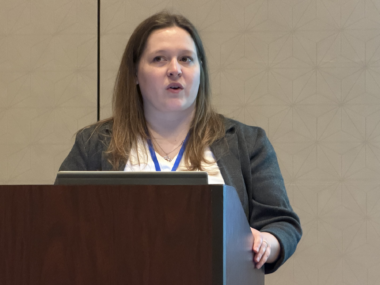
Jenny Riecke, MD, speaks at MDA Engage: Dallas. (Photo by Tara Haelle)
That doesn’t mean patients shouldn’t bring up their pain with their providers. Rather, Riecke recommends arriving at appointments with a clear, factual summary of what they’re experiencing to minimize the bias and emotion that can accompany discussions about pain.
When doctors ask patients to describe their pain, they’re looking for its characteristics, such as whether it is sharp or dull. They also want to know its severity, location, and the context in which it manifests — for example, at what time of day it strikes, whether specific activities or movements appear to trigger it or accompany it, and how long it lasts.
It’s also helpful to notice what eases pain or makes it worse. This can include activities such as stretching or resting, use of certain medications, heat or cold, massage, or topical treatments. All of this is important information for ensuring a personalized approach to pain, Riecke said.
“Sometimes our pain is changing over time,” she said, and a patient seeing their doctor after three months might have a lot to communicate since the last visit. “Something that helps some people is keeping a record of [their pain],” she said.

Tracking can help
Riecke noted a study in which participants recorded their daily pain intensity on a scale and, once a week, reported how much it interfered with what they wanted to do that week.
Some participants — but not all — “felt that this helped them understand their experience better, and also communicate this to their providers,” Riecke said. “They also felt like it gave them an emotional outlet somewhere to record this and have it be kind of validated and outside their body and their mind.”
If pain is a regular, daily occurrence, she doesn’t advise tracking it in real time, but patients can set aside one specific time of the day to reflect on how that day felt and record it.
The same concept may also apply to fatigue. A daily or weekly fatigue record should include a description of the type and severity of fatigue.
“One thing that’s really helpful for me is teasing out, is this sleepiness or is this, my muscles are tired?” Riecke said. “That kind of helps get us in the right direction, and sometimes it’s both.”
Other questions to consider are whether fatigue is affecting a person’s daily functioning and what else is going on, such as schedule changes, medications, or life stressors.
“Things that we’re looking for [are] associated features or other things going on that might give some [idea as] to why you’re experiencing this fatigue,” such as sleep or mood changes, Riecke said.

Treatment options
Common medications for pain start with over-the-counter treatments, including acetaminophen, nonsteroidal anti-inflammatory drugs, and topical treatments. Patients should always check with their doctor before taking these, Riecke said, to be aware of any specific precautions or risks and to determine the most appropriate dosage.
Prescription medications are guided by the type of pain someone is experiencing. Many drugs are approved to treat other conditions, such as seizure disorders, depression, or muscle spasticity, and are used off label for pain management. Stronger pain medications, particularly opioids, have many limitations and risks, but there are newer non-opiate medications coming down the pipeline, she said.
Procedural interventions, such as steroid injections, may also be used for pain management.
“Unfortunately, sometimes the only way we know something’s going to work is kind of trial and error,” Riecke said. And if a patient is trying something new, they need to discuss the risk-benefit tradeoff with their provider.
“Why do we think this is going to work? And what do we expect it’s going to do?” Riecke said. “Do we think it’s going to completely eliminate … pain, or do we think it’s going to just make it easier to do a certain task? That is a personalized decision and a discussion that you should be having with your care team.”
Paradoxically, one treatment option for fatigue is exercise, which is easier said than done when a person is feeling tired, Riecke said. Mindfulness and psychotherapy like cognitive behavioral therapy can also be effective, she said, but she advises patients to focus on energy conservation techniques. Energy conservation, she said, involves the “four Ps:” Prioritize activities, Plan ahead, Pace yourself, and Place yourself, referring to positioning the body as comfortably as possible.
Note: The SMA News Today team is providing coverage of the MDA Engage Symposium. Go here to see the latest stories from the conference.





Leave a comment
Fill in the required fields to post. Your email address will not be published.