
Scientists uncover key details on how nerve cell death occurs in SMA
Findings may help explain why earlier treatment results in better outcomes
Written by |
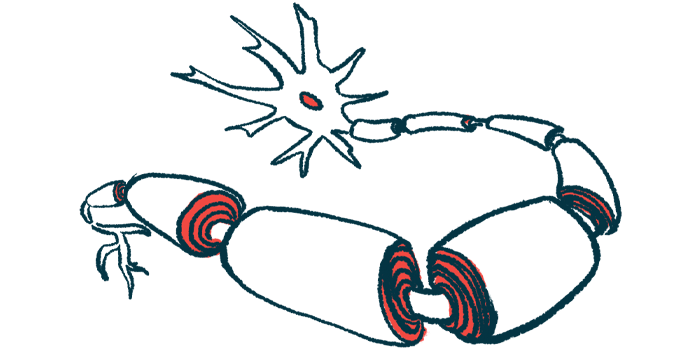
- In SMA, nerve cell death and progressive muscle weakness begin early within wire-like nerve fibers known as axons, a new study found.
- Available SMA treatments help preserve existing axons but cannot restore or regenerate those that have already degenerated.
- These findings highlight the critical need for early therapeutic intervention and combination therapies targeting axon regeneration.
In spinal muscular atrophy (SMA), the death of nerve cells — which results in the progressive muscle weakness and wasting that characterize the rare disease — begins in wire-like nerve fibers known as axons, a new study from researchers in Scotland shows.
The findings suggest that current SMA treatments can help preserve existing axons. However, once an axon has started to fall apart, available treatments cannot bring it back, according to the scientists.
This may help explain why earlier treatment is linked to better clinical outcomes in SMA — and may also lay the foundation for new treatment approaches aimed at restoring lost motor function in SMA patients.
“Importantly, … treatment at best preserved axons only when administered before degeneration began, with no evidence of an increase in axon numbers following treatment,” the researchers wrote. “This work highlights the importance of early therapeutic intervention and the potential for [new] therapies to further protect and regenerate vulnerable axons.”
The scientists tested their findings on axons in a mouse model of SMA, using an injectable treatment that the team noted was similar to an approved therapy for people with the disease. The results, the team says, underscore the need for “developing complementary therapies which can promote … axon regeneration.”
The study, “Early loss of axons limits the therapeutic window in a mouse model of spinal muscular atrophy,” was published in the journal BMC Neuroscience.

SMA is a genetic disease that affects motor neurons, which are the specialized nerve cells that control movement. Normally, motor neurons send signals to muscle cells, prompting the muscle to contract and triggering movement. In SMA, these nerve cells gradually sicken and die, resulting in muscle weakness and wasting.
Investigating how nerve cells die
Not all muscles are affected to the same degree in SMA. In this study, scientists from the University of Edinburgh sought to determine why the disease affects some muscles more than others. To do that, the researchers needed to understand exactly how motor neurons start to fall apart.
Working in a well-established mouse model of SMA, the researchers conducted detailed analyses of motor neurons connected to several different muscles that are affected at different rates by SMA.
Motor neurons contain a few key parts: There’s the body, which houses the cell’s DNA; the dendrites, which receive signals from other nerves; and the axon, which is the long, wire-like fiber that stretches out to send signals to muscles. The axon connects to a muscle cell at a site called the neuromuscular junction, or NMJ for short.
The team found that axons show signs of damage before any other part of motor neurons in SMA — in fact, axons start breaking down even before the NMJ starts to show any sign of dysfunction. The scientists also found that axon damage is more pronounced in muscles that are affected more severely by SMA, suggesting that the loss of these nerve structures plays a central role in driving the disease.
These findings redefine the timeline of [nerve and muscle damage in SMA], positioning axonal degeneration as a primary and early event.
Additional data showed that motor neuron axons develop more or less normally in SMA. But then the cytoskeleton — the molecular scaffold that gives the nerve fiber its structure — starts to crack, and soon the whole fiber collapses.
“These findings redefine the timeline of [nerve and muscle damage in SMA], positioning axonal degeneration as a primary and early event,” the researchers wrote. This emphasizes “the importance of early detection and intervention strategies aimed at preserving axonal integrity to maintain [axons] before NMJ disruption becomes apparent,” the team added.
Several disease-modifying treatments for SMA are available. These medications can slow the disease by targeting its root cause, but generally, they do not reverse disease progression that’s already occurred. As such, treatment is usually most effective when given early, studies have shown.
Using an SMA mouse model and a treatment similar to Evrysdi
In further experiments, the researchers gave the mice SMN-C8, an injectable treatment that the team said is similar to the approved SMA therapy Evrysdi (risdiplam). The scientists found that this treatment helped prevent the loss of undamaged axons, but those damaged before its use generally did not recover after treatment.
“This data suggests that treatment with [SMN-C8] can, at most, preserve axon numbers at the time of treatment but does not measurably reverse damage which has already occurred,” the researchers wrote.
According to the team, the findings explain what studies have shown.
“There is a wealth of evidence to show that earlier treatment leads to better outcomes in patients receiving [disease-modifying treatment], and this finding suggests that this could be in part due to a loss of motor axons which are not recovered by current treatment regimes,” the scientists wrote.
These findings underscore the importance of early diagnosis and treatment for SMA, the scientists noted, given that the earlier use of medications may help preserve axons and ultimately allow patients more long-term mobility. The team also called for future studies to look into strategies to help regenerate lost axons, which could help improve motor function instead of merely slowing disease progression.
“Future treatment strategies should combine [current] therapies with those which aim to support and regenerate motor axons, in an attempt to reinnervate muscles,” the researchers wrote.





Leave a comment
Fill in the required fields to post. Your email address will not be published.